If you’re a homeowner buying locally for a new hot water tank installation while simultaneously trying to enhance energy efficiency and lower your utility cost, you’ve definitely heard of the discussion between standard tank water heaters and their tankless alternatives. As more households choose energy-saving options, tankless water heater installations are rapidly gaining favour. But are they the ideal fit for your home?
In this tutorial, we are going to be comparing tank versus tankless water heater systems in detail, focusing on the advantages of the more modern tankless water heaters. By the end, you’ll understand why so many people in Vancouver and beyond are making the transition.
Which one is better?
The ideas on this subject differ depending on who you speak to. They are substantially more efficient and smaller than tank water heaters. Most see tankless as the smarter choice. However, in some circumstances, tankless is not the way to go, and a tank water heater is a better option. Here’s a closer look at everything you need to know about tank vs. tankless water heaters.
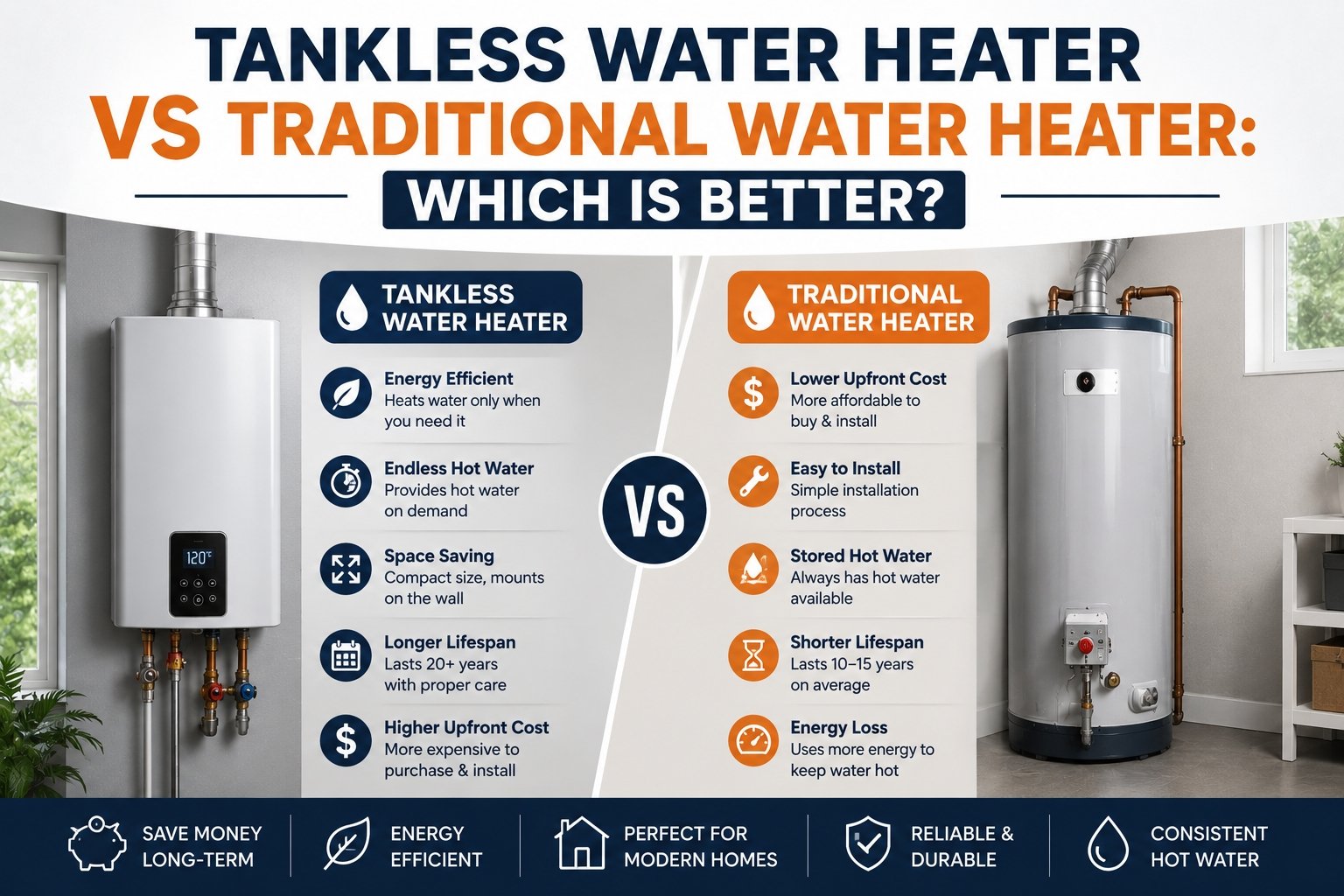
Tank Storage Water Heaters
Prices vary wildly based on the kind, size, and details of your home. Tank water heaters (also known as classic water heaters) are relatively easy to install, and the installation process normally takes just a few hours. Tank water heaters are usually installed indoors since they cannot endure extreme weather conditions. The tanks are available in electric, natural gas, and propane variants. The gas models will keep on working after a power loss.
Tank water heaters contain a storage tank with hot water ranging from 20 to 80 gallons. They are quite big and take up some space in your house. But if you burn up what’s in the tank, you have to wait for your water heater to make additional hot water.
A tank water heater will typically last from 10 to 15 years.
Benefits:
- Lower initial cost
- Easy to install
- Time-tested system
- In case of need, a fresh water source is available in the tank.
- It is sometimes possible to install an electric tank water heater without making large alterations to the electrical system of your home or buying new equipment at great cost.
Disadvantages:
- Energy waste – The energy you consume by maintaining a tank full of hot water all the time.
- Shorter life spans
- If the heater fails, litres of water may leak or spill from the tank.
- If you empty the tank, you have to wait for hot water.
Tankless Water Heaters
Prices vary widely based on the type, manufacturer, your home and whether you’re installing a new heater or replacing an existing one.
Tankless water heaters are smaller, so they take up less space in your home. But it is more complicated to install a tankless water heater. You might have to improve your home’s electrical system to support an electric tankless unit or run a dedicated gas line to your gas-powered unit. Depending on the type of unit you purchase, you may need to install other equipment such as new exhaust vents or new pipes.
Tankless systems heat your water as needed with electric or gas coils. Tankless water heaters heat water on demand but do have output limits in their flow rate. That means if you’re cleaning the dishes, doing the laundry, and having a shower all at the same time, your heater may not be able to make hot water quickly enough. Flow rate is the amount of water a tankless water heater can produce in gallons per minute. Gas devices tend to heat water faster than electric units.
Tankless water heaters have a life expectancy of 20 or more years.
Benefits:
- Efficient – no need to pay to maintain a tank regularly filled with hot water.
- More years of life.
- It saves space.
- Tankless heaters generally come with longer warranties.
Disadvantages:
- High upfront cost for equipment and installation.
- You might have to make some big alterations to your home to accommodate a tankless unit.
- In some circumstances the higher up-front costs will offset your long-term savings.
Conclusion
Both standard tank water heaters and tankless water heaters have their own advantages depending on your home’s demands, budget, and hot water usage. Traditional tank systems are less expensive to build, more cost-effective and easier to install. Tankless water heaters are more energy efficient, last longer, and save space. While they’re more expensive to install, many homeowners choose tankless systems because of their cutting-edge performance and long-term savings. Knowing the differences between both systems can help you choose the proper water heater that will give you comfort, efficiency, and reliable hot water for your household.